

AI can generate art, but can it understand "only this part"?
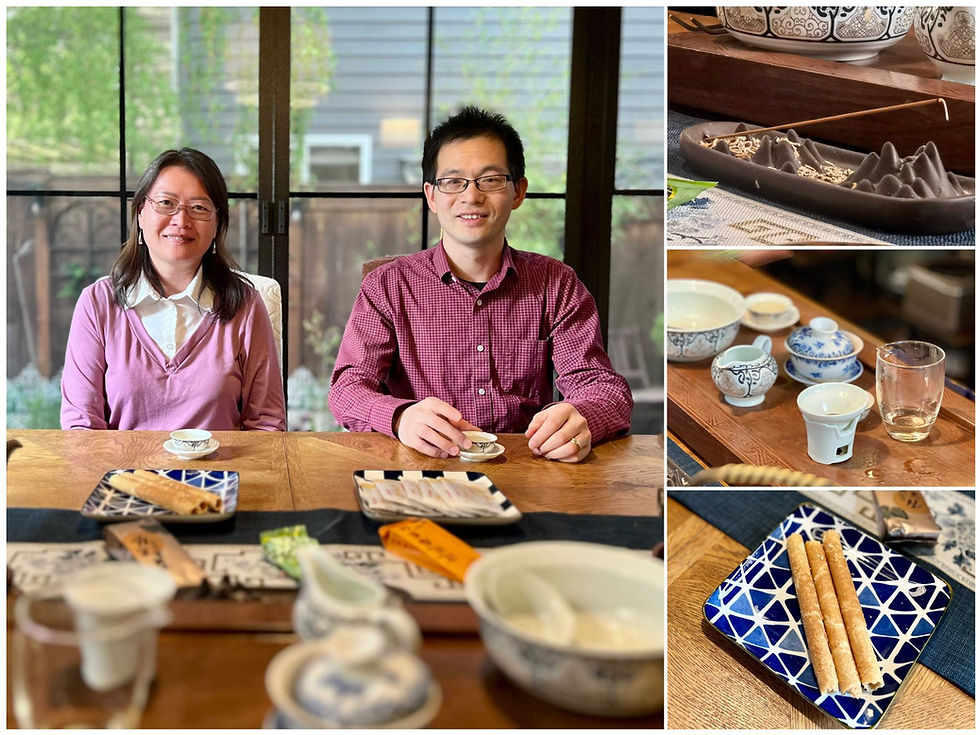
For this "100 Tea-Talk," I sat down with a VFX artist, Emma Johnson, who has built CG worlds for years. We brewed homegrown spring tea from my family's tea garden in China. She told me: in video games, the GPU only renders where players look. Some hypothesize this is how our eyes or brains image the world.
Three takeaways:
1. Reality may be a "render"
She described real‑time rendering: computers save memory by rendering only where players are. Then we jumped to microphysics – atoms have no solid boundaries or colors, so why do we see colorful shapes? Then to hallucinogen effects: people report merging with the environment, losing boundaries, becoming particles or pure information. All pointing to one question: the origin of all things.
The insight: Those who build virtual worlds know the line is blurry. They've been behind the curtain longer than anyone.
2. AI doesn't "know" – it calculates probabilities
She tried ChatGPT and Gemini. Asking AI to modify one part of an image usually changed more than she wanted. Newer versions are better, but not ideal. If AI can't generate art exactly as the creator intends, it's not a professional production tool – it still needs manual fixes. She believes AI will get there someday, though.
The insight: We mistake statistical fluency for comprehension. Under the hood, it's pure math – which cannot hold a consistent creative vision across iterations.
3. Massive layoffs and the paradox of purchasing power
We discussed AI‑driven layoffs. Her thought: "The goal of AI is to replace human workers. As jobs vanish, even from a capitalist view – what happens? If 50% of labor is replaced, will society have enough purchasing power? If not, will companies need the same production capacity? Then what? Maybe a 'global income' for basic goods – only rich work, poor live on handouts. That doesn't make sense."
The insight: Capitalists chase efficiency and profit, but do they also consider society's need for purchasing power?
Last pour:
We finished the tea with the taste of the spring. Jensen Huang says AI is just a tool. She disagrees – she thinks AI may become part of society.
What's one thing AI completely misunderstood for you?

AI能画画,但能听懂「只改这一点」吗?🍵
这期的「100次茶谈」,我约了特效艺术家Emma,她干了多年的CG。天气渐暖,我选了自家茶园去年的春茶。
她说:「游戏里,显卡只渲染玩家看的地方。有人猜人眼(或大脑)成像也是这个理。」
聊了一个多小时,探讨了很多不同的话题,有三点感触值得分享出来。
1. 现实可能也是个「渲染」
她讲实时渲染:电脑为省内存,只渲染玩家当前在的场景。然后跳到微观物理——原子没有边界和颜色,为什么我们看到五彩世界?又跳到致幻剂反应:有人觉得跟环境融合在一起,没了边界,变成粒子甚至信息。最后都指向一个问题:万物源头。
知见: 当制造虚拟世界的人说那条线是模糊的时候,咱们最好相信。
2. AI不是真“明白”,它只会算概率
她试过ChatGPT和Gemini。让AI改图里的一个细节,它经常改多了。新版好点,但仍不理想。如果AI不能完全按创作者意图出东西,就当不了正经生产工具——还得靠人修改。但是,她觉得早晚AI能够做到。
知见: 我们错把「听着像人」当成「像人一样思考」。底下是纯数学,保不住稳定的创作念头。
3. 大规模裁员和没人买东西的悖论
聊到AI导致的裁员。她说:「AI的目标就是取代人。工作越来越少,哪怕只从资本家角度想——一半活被AI干了,还有足够的购买力吗?没有的话,公司还需要那么大产能吗?然后呢?发全球基本收入让穷人活着?那不就只有富人工作,穷人拿钱过活?怎么想都不对。」
知见: 资本家追效率和利润,有没有想过社会还需要有人买东西?
最后一泡:
茶喝完了,意犹未尽的不止是春茶带来的春天气息。黄仁勋说AI只是工具。她不同意——她觉得AI可能会成为社会的一部分。
你有没有让AI做过什么,结果它完全会错了意?

Comments